Course description:
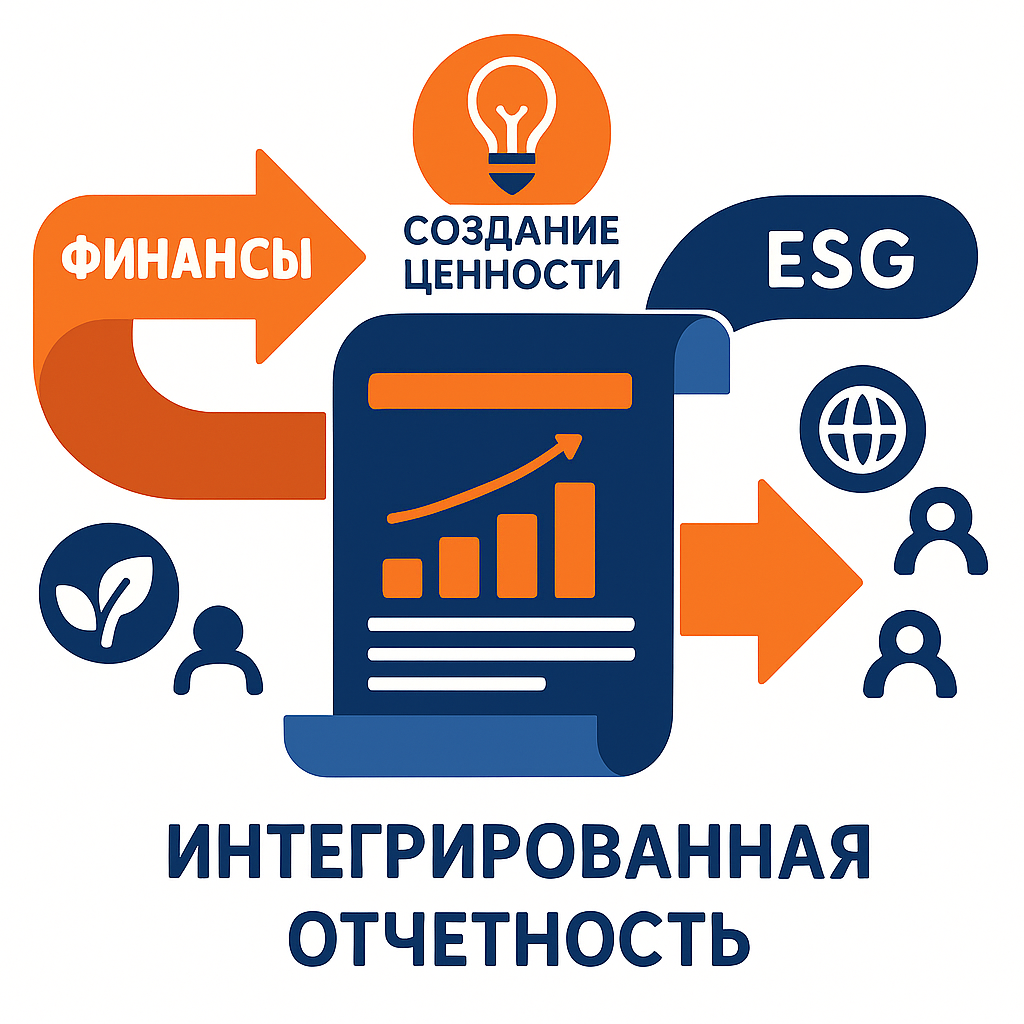
Today investors, regulators and customers expect not only numbers in the financial statements, but also an understanding of what lies behind those numbers, how the company creates value and how resilient it is to future challenges. This is exactly what integrated reporting addresses.
The course is designed for companies that already prepare (or plan to prepare) IFRS, ESG or non-financial reports and want to move to the next level — bringing all the information together into a single strategic picture.
We will look at:
A special focus is on the requirements of IFRS S1, the concept of «capitals» from the Framework, and the principles of materiality and value. Participants will work through how to build into the report the links between strategy, risks, governance, performance and sustainability — not just in structure, but in substance.
We will look at examples of companies where integrated reporting is not a “separate file” but part of the culture and management system.
Target audience:
CFOs, ESG coordinators, corporate secretaries, strategists, reporting specialists, board members, methodologists, managers, IR teams and heads of transformation programmes.
Course programme:
Today investors, regulators and customers expect not only numbers in the financial statements, but also an understanding of what lies behind those numbers, how the company creates value and how resilient it is to future challenges. This is exactly what integrated reporting addresses.
The course is designed for companies that already prepare (or plan to prepare) IFRS, ESG or non-financial reports and want to move to the next level — bringing all the information together into a single strategic picture.
We will look at:
- how to combine IFRS and ESG information,
- how to build the logic of connectivity,
- what is really important to disclose so that it is read, understood and trusted.
A special focus is on the requirements of IFRS S1, the concept of «capitals» from the Framework, and the principles of materiality and value. Participants will work through how to build into the report the links between strategy, risks, governance, performance and sustainability — not just in structure, but in substance.
We will look at examples of companies where integrated reporting is not a “separate file” but part of the culture and management system.
Target audience:
CFOs, ESG coordinators, corporate secretaries, strategists, reporting specialists, board members, methodologists, managers, IR teams and heads of transformation programmes.
Course programme:
- What integrated reporting is: the concept, the role of the ISSB, the link with IFRS and ESG.
- Principles of integrated reporting: value, connectivity, conciseness, focus on the future.
- How to integrate IFRS S1/S2 disclosures, GRI and financial statements.
- The six capitals model: how to show where value is created and where it goes.
- The impact of ESG factors on the business model, risks, strategy and KPIs.
- Organising the preparation of an integrated report: team, calendar, roles.
- How to visualise complexity: structure, diagrams, dynamics, storytelling.
- Integration within the company: how to use reporting as an internal tool.
- Communication with investors: what to convey and how.
- Examples of strong integrated reporting: analysis of reports by leading companies.
Academic hours: 5 (CPD = 4)
Document: State-recognised certificate of training
Document: State-recognised certificate of training