Course description:
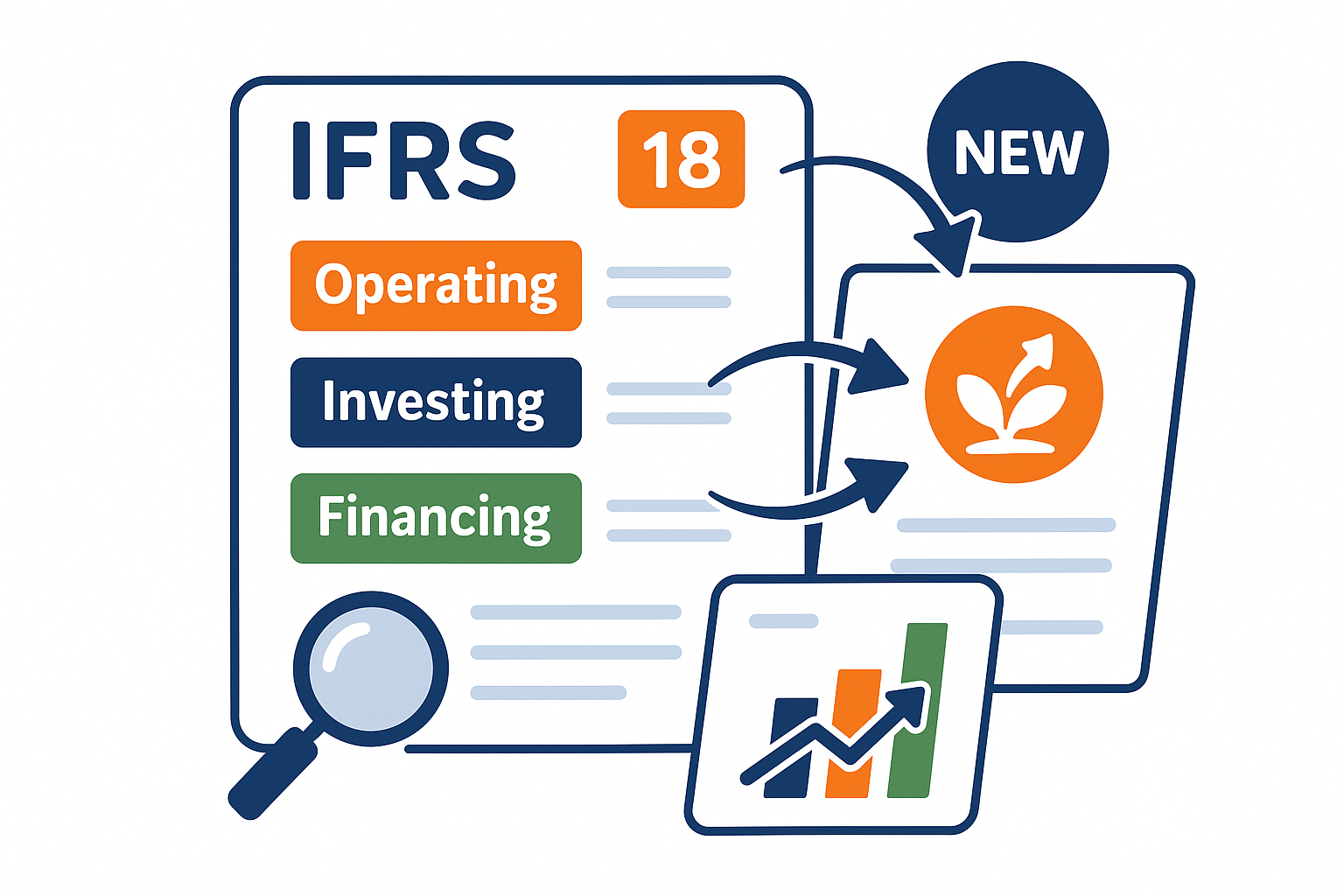
IFRS 18 is not just “one more standard”, but a new logic for presenting profit, designed to make financial statements clearer, more manageable and more comparable. It changes the familiar structure of the statement of profit or loss, introduces mandatory categories, shapes the presentation of information around the management approach and makes disclosures more transparent.
This course is designed for specialists who already work with IFRS and need to prepare their company for the new standard. Participants will learn exactly what is changing: the introduction of clear categories (operating, investing, financing), rules for classifying income and expenses, the principles of management performance measures (MPMs) and a single approach to other income and expenses.
A separate block is devoted to how to make the transition: which preparatory steps need to be taken now, which management formats must be agreed, and how to reflect industry specifics (for example, for banks, insurers and industrial companies).
The course presents the transition logic, implementation timeline and impact on key indicators, as well as recommendations on transforming reporting templates and configuring systems and internal reporting.
Target audience:
CFOs, IFRS specialists, accountants, methodologists, auditors, controllers, owners of management reporting, and members of reporting transformation working groups.
Course programme:
- What IFRS 18 is: why it was introduced and what it is meant to achieve.
- The new structure of the statement of profit or loss: three categories of profit.
- Rules for classifying income and expenses.
- Mandatory use of the management approach (MPMs).
- Separate presentation of the results of investing and financing activities.
- Transition period: timeline, key steps, preparation of internal data.
- Application in different industries (finance, real sector, retail).
- How to prepare the business for the transition: internal reporting, templates, communication with stakeholders.
- Disclosures in the notes.
- Impact on KPIs, investor perception and audit.
Academic hours: 5 (CPD = 4)
Document: State-recognised certificate of training
Document: State-recognised certificate of training